
 By gold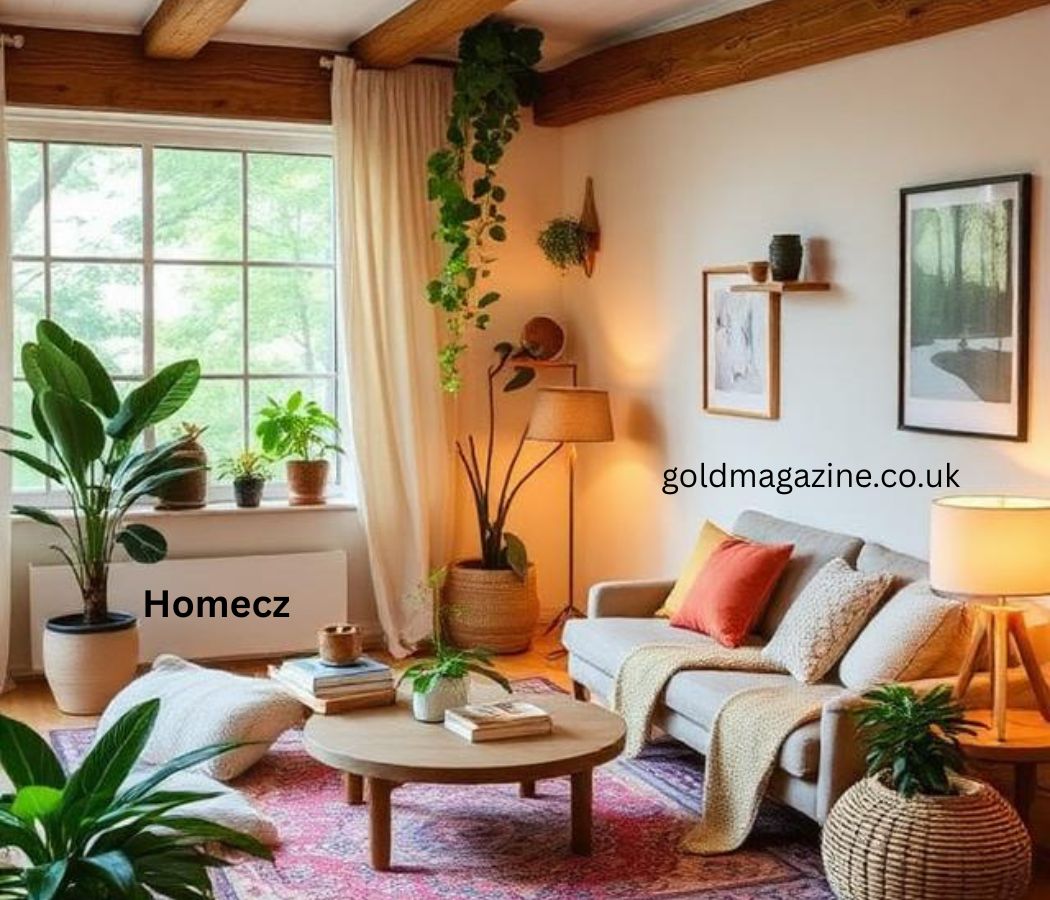
Imagine walking through your front door after a brutal 10-hour workday. The lights don’t just turn on—they warm to a soft 1800K amber glow. Your favorite jazz playlist drifts from invisible speakers. The air smells faintly of lavender (not from a chemical plug-in, but from a smart diffuser with refillable oils). And your energy monitor shows you earned $0.43 today by selling solar power back to the grid.
That’s not science fiction. That’s Homecz.
If you’ve never heard the term, you’re not alone. Homecz isn’t a product—it’s a philosophy. It’s the intersection where home automation, hygge (coziness), and circular/zero-waste living collide. Most smart home guides focus on gadgets. Most cozy blogs ignore efficiency. And most eco-advice feels like deprivation. Homecz solves all three.
In this 2,500-word guide, you’ll learn what Homecz really means, how to build one on any budget, and why 2026 is the year this movement goes mainstream. No tech PhD required. No granola guilt either.
Background: Where Did Homecz Come From?
The term [homecz] emerged quietly in 2023–2024 on niche European design forums (particularly Czech and Nordic), but it exploded in early 2026 as energy prices and climate anxiety rose simultaneously. The “CZ” is debated: some say it stands for “cozy,” others point to “circular zero-waste,” and a few insist it’s a wink to the .cz domain (Czech Republic’s smart-home innovators).
But the core idea is universal: Technology should serve comfort and conservation, not the other way around.
Most smart homes today are “loud”—blinking LEDs, frequent app notifications, and devices that become e-waste after two years. Homecz flips that script. It prioritizes:
-
Passive sensors over active controls.
-
Repairable, modular hardware.
-
Energy-positive behaviors (e.g., automating blinds to reduce HVAC load).
-
Textures, silence, and warmth as key performance indicators.
Think of Homecz as the slow food movement, but for your living space.
Main In-Depth Sections: The 7 Pillars of Homecz
1. Lighting That Breathes, Not Blinds
Most smart bulbs are too harsh (5000K daylight) or too gimmicky (16 million colors you’ll never use). Homecz lighting follows circadian rhythms.
How to do it right:
-
Use tunable white bulbs (2200K–4000K) from brands like IKEA TRÅDFRI or Philips Warm Glow.
-
Automate: Sunrise simulation in bedroom (6:30–7:00 AM), warm dimming in living room after 8 PM.
-
Pro secret: Install motion sensors in hallways and bathrooms set to <10% brightness at night. No more blinding midnight trips.
Real-world example: A Homecz practitioner in Seattle reduced his evening screen time by 37% simply by having lights gradually shift to “campfire mode” (1800K) after 9 PM.
2. Thermal Coziness Without Wasting Energy
Heating and cooling account for ~50% of home energy use. Homecz doesn’t tell you to wear a sweater indoors—it automates temperature zones.
Smart thermostat setup that actually feels cozy:
-
Set back only 5°F at night (not 15°F) to avoid “cold shock” in the morning.
-
Use window/door sensors to shut off HVAC when a window opens for more than 2 minutes.
-
Install smart radiator valves (e.g., Tado, Eve Thermo) per room. Keep bedrooms at 66°F, living room at 70°F, unused rooms at 58°F.
Cozy bonus: A heated floor mat under your desk or bathroom rug (on a schedule) uses 1/20th the energy of raising the whole house temperature.
3. Air, Sound, and Scent (The Invisible Trio)
Homecz cares deeply about things you can’t see but can feel.
| Element | Homecz Approach | What to Avoid |
|---|---|---|
| Air quality | CO2 + humidity sensors that trigger bathroom fans or HRV (heat recovery ventilator) | Scented plastic plug-ins (VOCs) |
| Sound | Quiet-close dampers on cabinets + brown noise machines (better than white noise for sleep) | Constant smart speaker “dings” |
| Scent | Ultrasonic diffusers with water + single essential oils (not synthetic blends) | Glade / Febreze (they mask, don’t clean) |
Unique insight: The most underrated Homecz device is a circulator fan pointed at the ceiling. It destratifies warm air, saving up to 15% on heating, and creates a gentle breeze that feels like a natural nap trigger.
4. Circular Tech: Buy Once, Repair Many Times
The dirty secret of smart homes: most devices are disposable. Homecz demands repairability and standards-based protocols (Zigbee, Matter, Thread) over proprietary junk.
What to look for:
-
Devices with screws (not glued) and available spare parts (e.g., Shelly, Hubitat, some Aqara models).
-
Batteries that are user-replaceable CR2032 or AA/AAA—never sealed Li-ion packs.
-
Second-hand first: A used Philips Hue bridge works as well as a new one. Check eBay or FB Marketplace.
Case study: A Homecz forum member built a fully automated apartment for $340 using second-hand IKEA blinds, a used Raspberry Pi running Home Assistant, and salvaged Zigbee sensors. It runs reliably 18 months later.
5. The “Quiet Automation” Rule
If you have to open an app to make something happen, it’s not Homecz—it’s a remote control. True Homecz is invisible.
Examples of quiet automation:
-
Washer/dryer finished? A gentle LED strip under the kitchen cabinet glows green (no phone notification).
-
Front door left ajar more than 60 seconds? A soft chime from a bedside radio, not a screaming siren.
-
Low on toilet paper? A weight sensor under the roll triggers a “add to shopping list” automation in your grocery app—silently.
This is the opposite of most “smart home” marketing. You aren’t a system administrator. You’re a human who deserves peace.
6. Energy Monitoring as a Game, Not a Guilt Trip
Many people avoid energy monitors because they feel judged. Homecz reframes it.
The reframe: Track earned savings, not spent watts.
-
Use a device like Sense or Emporia Vue to identify “vampire loads” (e.g., an old cable box using 15W 24/7 costs you ~$16/year—kill it).
-
Automate high-draw devices (space heater, EV charger) to run only when your solar is peaking or electricity is cheapest (real-time pricing via Octopus or similar).
Psychological trick: Create an automation that sends a celebratory message (“You saved a latte today!”) when your home’s baseline drops below 100W. Positive reinforcement works.
7. The Analog Counterbalance
Here’s what most blogs miss: Homecz requires intentional analog zones. A fully automated home feels like a hotel—sterile. You need rough edges.
Designate at least one “dumb” area per room:
-
A physical light switch that directly cuts power (good for device reboots and fire safety).
-
A bookshelf with real books (no e-reader allowed).
-
A manual coffee grinder or pour-over setup. The ritual matters.
Why? Because Homecz isn’t about maximizing control. It’s about optimizing forgetting—so you can focus on what’s actually important.
Practical Tips / How-to: Your First 7 Days of Homecz
You don’t need to rewire your house. Start small.
1st Day: Unplug one “annoying smart device” (e.g., a speaker that beeps on every command). Notice how it feels.
2nd Day: Set a single scheduled automation: bedroom lamp to 1% at 10:30 PM (winding down cue).
3rd Day: Buy a $10 plug-in energy monitor (Kill-A-Watt). Measure your TV + game console standby draw.
4th Day: Swap one disposable air freshener for a glass spray bottle with water + lemon essential oil.
5th Day: Join the r/Homecz subreddit (yes, it’s small but mighty) and read the “failed automation” thread—mistakes are gold.
6th Day: Program your thermostat to lower 3 hours after your typical bedtime, not immediately. Avoid waking up cold.
7th Day: Do nothing automation-related. Light a candle. Listen to the quiet. That’s the whole point.
Common Mistakes or Challenges + Solutions
| Mistake | Why It Happens | Homecz Solution |
|---|---|---|
| Buying all one brand (e.g., all Google) | Convenience trap | Mix Matter-certified devices so you can change hubs later. |
| Over-sensing | “More data is better” fallacy | Start with 3 sensors: motion, temp/humidity, contact. Add only if you act on the data. |
| Forgetting offline fallback | Relying on cloud | Choose local protocols (Zigbee, Z-Wave) over Wi-Fi. Host Home Assistant on a Raspberry Pi. |
| Coziness death by blue LED | Cheap components use bright blue standby lights | Use light-dimming stickers ( $5 on Amazon) or choose devices with physical off switches. |
| E-waste guilt | Old devices still work | Repurpose: old Echo Dot → white noise machine for nursery; old phone → dedicated recipe display. |
Pros, Cons, and Balanced Analysis
Pros (The Homecz Advantage)
Lower utility bills (typical reported savings: 12–28% combined heating/electric)
Better sleep (circadian lighting + brown noise + CO2 monitoring)
Less decision fatigue (automations remove 5–10 trivial choices daily)
Higher resale value (Matter-ready homes are trending in 2026 real estate)
Mental comfort (knowing your home isn’t wasting resources while you’re away)
Cons (The Honest Truth)
Upfront learning curve (Zigbee vs. Thread vs. Wi-Fi is real confusion)
Initial cost ($200–500 minimum for a starter kit, though payback in ~8 months)
Occasional frustration (firmware updates can break automations—schedule them monthly)
Not renter-friendly (some landlords forbid changing thermostats or switches)
Over-automation risk (you might feel “watched” if sensors are everywhere—stay minimalist)
Balanced take: Homecz is not for everyone. If you enjoy manually tweaking your home and hate troubleshooting, skip it. But if you value comfort and conscience, the trade-offs are worth it.
Future Trends or Predictions (2026–2030)
-
AI that learns your “cozy rhythm” – No more scripting. Next-gen Home Assistant will watch your manual overrides for two weeks then propose automations. (Early beta available in Q3 2026.)
-
Energy-positive gadgets – Solar-powered motion sensors and vibration-harvesting light switches (no batteries ever). A Czech startup, Zira, already has a prototype.
-
Repair-as-a-service – Brands like Framework (laptops) inspire smart-home devices. By 2028, expect “right to repair” laws to cover thermostats and cameras.
-
The anti-smart backlash – A parallel movement of “dumb homes” will grow, ironically increasing Homecz’s appeal as the moderate, thoughtful middle path.
-
Homecz certifications – Like LEED but for cozy + circular. Look for “Homecz Verified” badges on Matter devices by late 2027.
Conclusion & Key Takeaways
Homecz isn’t about impressing visitors with voice-controlled curtains. It’s about waking up gently, breathing clean air without thinking, and never yelling at a dead battery again.
Your Quick Summary Box:
Homecz = Smart + Cozy + Circular – Not one without the others.
Start with lighting & thermostats – Biggest comfort-per-dollar impact.
Prioritize local control (Zigbee/Matter) – Avoid cloud-dependent junk.
Create analog zones – Preserve human rituals.
Monitor energy as savings, not shame – Celebrate small wins.
Buy used, repair, repurpose – The most eco-friendly device is the one already made.
Your home should feel like a refuge, not a laboratory. Go ahead—dim those lights, close that automated blind, and take a nap. You’ve earned it.