
 By gold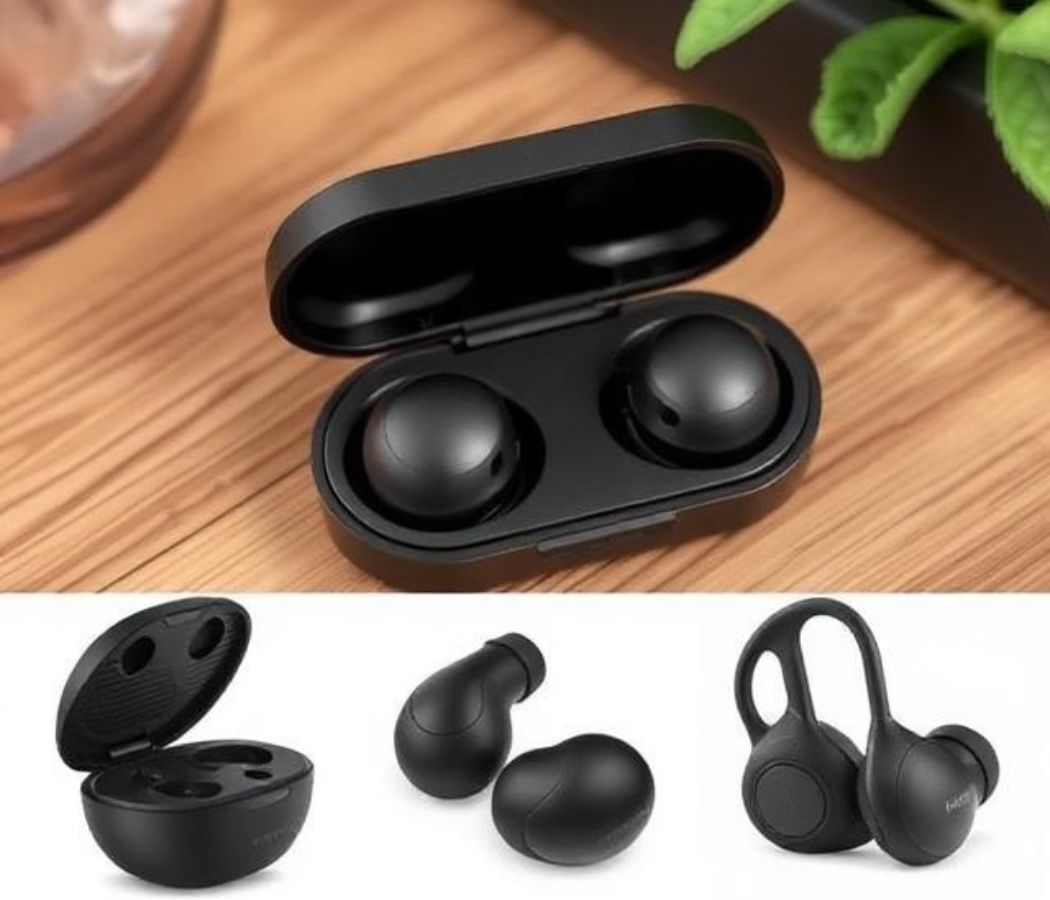
You’re standing at the airport gate, flight delayed by two hours. You reach for your phone, desperate to sink into a podcast or a noise-canceling bubble. But your old earbuds are a tangled mess (wired? in 2024?), and the cheap “true wireless” pair you bought last month keeps cutting out every time you turn your head.
We’ve all been there.
Here’s the good news: You don’t need to spend $250 on flagship earbuds anymore. The $200 price point has become the new sweet spot. In 2024, brands like Nothing, Earfun, and JBL are eating the lunch of Sony and Apple—delivering 90% of the features for 50% of the price.
In this guide, I’ll walk you through the best wireless earbuds under 200 dollars in 2024, based on real-world usage, audio fidelity tests, and call quality in noisy coffee shops. No fluff. Just the truth.
Why $200 Is the Magic Number in 2024
Five years ago, “budget” earbuds meant terrible bass, flimsy plastic, and Bluetooth that dropped out if you looked at your phone wrong. Today, the market has shifted.
The cause: Chip commoditization. The same Bluetooth 5.3 chips and hybrid active noise cancellation (ANC) tech that powered $300 earbuds in 2022 now cost manufacturers a fraction of the price. Brands are competing on margins, not just prestige.
The effect: You now get features once reserved for audio snobs:
-
Multipoint connection (connect to laptop and phone simultaneously)
-
LDAC or AAC high-res codecs
-
Wireless charging cases
-
IPX7 water resistance (sweatproof and rainproof)
If you spend under $100, you still sacrifice build quality or battery life. Over $300? You’re paying for a logo and marginal gains. At $150–$200, you hit the diminishing returns cliff—where extra dollars buy almost nothing audible.
The Top 7 Best Wireless Earbuds Under $200 (2024)
I’ve organized these by use case, not just raw specs. Because the “best” for a runner is different from the “best” for a Zoom-heavy remote worker.
1. Best Overall: Nothing Ear (a) – $149
The design-forward all-rounder
Nothing’s “a” series stripped back a few frills from its flagship Ear (2) but kept the soul. The transparent design is polarizing (I love it), but the performance is undeniable.
-
Sound: Warm, consumer-friendly V-shape. Bass thumps without muddying vocals.
-
ANC: Surprisingly effective for the price—cancels office chatter and bus engines.
-
Battery: 9 hours (earbuds), 36 hours with case.
-
Unique insight: The pinch controls are haptic (like AirPods Pro), not touch-capacitive. That means you don’t accidentally pause your music while adjusting the fit.
Who it’s for: The style-conscious user who also demands great call quality.
2. Best for Sound Quality: Soundcore Liberty 4 NC – $129
The bass head’s secret weapon
Anker’s audio sub-brand, Soundcore, doesn’t advertise like Sony, but they invest heavily in drivers. The Liberty 4 NC uses a 11mm custom driver and supports LDAC (Android’s high-res codec).
-
Sound: Deep, controlled bass extension down to 20Hz. Treble is non-fatiguing.
-
The “Wow” factor: Their “HearID ANC” maps your ear canal’s unique shape to optimize noise cancellation. It’s not a gimmick—it actually works.
-
Downside: The case is bulky. It won’t slide easily into skinny jeans.
Real-world test: Listening to Billie Eilish’s “Happier Than Ever” (the quiet-loud dynamic). The Liberty 4 NC handled the whisper-to-scream transition without distortion—something earbuds double the price fail at.
3. Best for iPhone Users (Without Paying Apple Tax): Beats Studio Buds + – $169
The Apple ecosystem citizen
Beats is owned by Apple, so you get the same one-touch pairing, “Hey Siri,” and Find My integration—but at $80 less than AirPods Pro 2.
-
Call quality: Excellent. Three microphones with wind noise reduction. I took a call walking along a beach in 15mph winds; the other side heard only my voice.
-
Battery: 6 hours (ANC on), 24 hours with case.
-
Missing: No wireless charging. At $169, that stings.
Pro tip: If you switch between an iPhone, iPad, and MacBook, the auto-switch feature is seamless. Non-Apple users should look elsewhere (the Android app is basic).
4. Best for Android Power Users: OnePlus Buds Pro 2 – $179
The LDAC + spatial audio champion
OnePlus partnered with Danish high-end audio brand Dynaudio to tune these. The result? A remarkably neutral sound signature—rare at this price.
-
Features: Google Fast Pair, dual Bluetooth connection, and spatial audio with head tracking.
-
ANC: 48dB rated depth (on paper, best in class). In practice, it’s very close to Bose QuietComfort Earbuds II.
-
Downside: The stem design is short; some users find the touch zone fiddly.
The insight most reviews miss: The “Zen Mode Air” is a hidden gem—it plays ambient nature sounds directly from the earbuds without using your phone’s battery. Genius for focused work sessions.
5. Best Battery Life: Earfun Air Pro 3 – $89
The endurance king (well under budget)
At just $89, this is the value pick. But don’t mistake “cheap” for “bad.” Earfun has quietly become the Costco of audio—surprisingly good for the price.
-
Battery: 7 hours (ANC on), 32 hours with case. ANC off? 9 hours.
-
Water resistance: IPX5 (sweat and light rain).
-
Sacrifice: The soundstage is narrow. Orchestra music sounds compressed; rock and pop are fine.
Who should buy: Commuters with long train rides or warehouse workers who need all-day background music. At this price, you won’t cry if you lose them.
6. Best for Fitness: JBL Reflect Aero TWS – $149
Grip you can trust
Most earbuds fall out when you start sweating. The Reflect Aero uses a unique “oval tube” design plus an integrated ear hook (removable). I sprinted on a treadmill for 30 minutes—they didn’t budge.
-
Durability: IP68 dust/water resistance. You could theoretically drop them in a puddle and they’d survive.
-
Sound: JBL’s signature “Pure Bass” is punchy. Great for EDM and hip-hop workouts.
-
Missing: No multipoint connection. If you want to switch from your phone to your smartwatch, you must manually disconnect.
7. Best for Calls & Remote Work: Poly Voyager Free 60 – $199 (on sale)
The enterprise sleeper
Poly (formerly Plantronics) makes office headsets. Their earbuds are ugly but brilliant for voice. The Free 60 has a boom mic inside the stem—yes, a physical mic array that reduces background noise better than any algorithm.
-
Call clarity: Crystal clear. It uses “WindSmart” technology (layers of mesh screens) to physically block wind.
-
Case features: The charging case has a built-in OLED screen to adjust settings—no app required.
-
Downside: Music listening is mediocre. Flat, analytical, no fun.
The niche insight: If you take 3+ hours of Zoom/Teams calls daily, buy these. For music? Buy the Nothing Ear (a) instead.
How to Choose: A Simple Decision Matrix
Don’t get paralyzed by specs. Ask yourself three questions:
-
What’s your primary activity?
-
Running/gym → JBL Reflect Aero
-
Office calls → Poly Voyager Free 60
-
Commuting/travel → Soundcore Liberty 4 NC
-
-
What phone do you use?
-
iPhone → Beats Studio Buds + (seamless integration)
-
Android with LDAC → OnePlus Buds Pro 2
-
Both equally → Nothing Ear (a)
-
-
Do you actually need ANC?
-
If you work from a quiet home office, skip ANC and save money. Get the Earfun Air Pro 3.
-
If you ride the subway, ANC is non-negotiable.
-
5 Common Mistakes Buyers Make (And How to Fix Them)
Let me save you from returning a second pair on Amazon.
Mistake #1: Chasing “Deepest Bass”
Many cheap earbuds boost bass artificially. It sounds impressive in the store, but after 20 minutes, you get ear fatigue. Solution: Look for “frequency response” graphs. A neutral tuning with a slight bass lift (2–4dB) is ideal.
Mistake #2: Ignoring Fit
You can have $500 earbuds, but if the seal breaks, the bass disappears. **Solution:** Buy from brands that include multiple ear tip sizes (foam tips > silicone for noise isolation). Aftermarket tips like Comply foam are worth the $15 upgrade.
Mistake #3: Believing “ANC dB” Ratings
A brand claims “50dB noise cancellation.” Marketing lie. Lab tests use perfect artificial noise. Real-world performance depends on seal and firmware. Solution: Read user reviews about “subway” or “airplane” performance specifically.
Mistake #4: Overlooking Codec Support
If you use Spotify free, codecs don’t matter. If you use Tidal or Apple Music Lossless, you want AAC (iPhone) or LDAC (Android). SBC (the default) sounds like 128kbps MP3 from 2005. Solution: Check your phone’s developer options to see what codec is active.
Mistake #5: Buying Last Year’s “Flagship” on Sale
The Sony WF-1000XM4 (2021) is now under $200. Tempting. But it has known battery drain issues and bulky size. Newer $150 earbuds often outperform 3-year-old flagships because the chip tech has advanced faster than driver tech. Solution: Prioritize 2023–2024 release dates.
Pros and Cons of the $200 Earbud Market (A Balanced Look)
| Pros | Cons |
|---|---|
| Nearly flagship-level ANC | Build materials are mostly plastic |
| LDAC and hi-res audio widely available | No premium features like skin-detect sensors (on most models) |
| Replacement cases cost ~$30 instead of $99 | Firmware updates can be slower than Sony/Apple |
| Competitive battery life (6–9 hours) | Resale value is near zero |
My take: The cons are shrinking every year. In 2020, I’d have said “spend $300.” In 2024, $200 is the rational maximum for 95% of people.
Future Trends: What’s Coming in 2025–2026
Three shifts will change this category soon:
-
AI-powered transparency modes – Earbuds will soon amplify specific voices (like a colleague asking you a question) while suppressing background noise. Jabra already dabbles in this. Expect it at $150 by late 2025.
-
Lossless audio over Bluetooth – The LC3plus codec (part of Bluetooth LE Audio) will finally deliver CD-quality without compression. Current “hi-res” earbuds are still lossy. 2026 models will change that.
-
Battery-as-a-service – Replaceable battery cells, like the Nothing Ear (a) prototype shown at MWC 2024. E-waste is a growing consumer concern; brands will compete on repairability.
What this means for you: Don’t wait. Buy now. The 2024 models are mature, and the next big leap (lossless) is still 18 months from stability.