
 By gold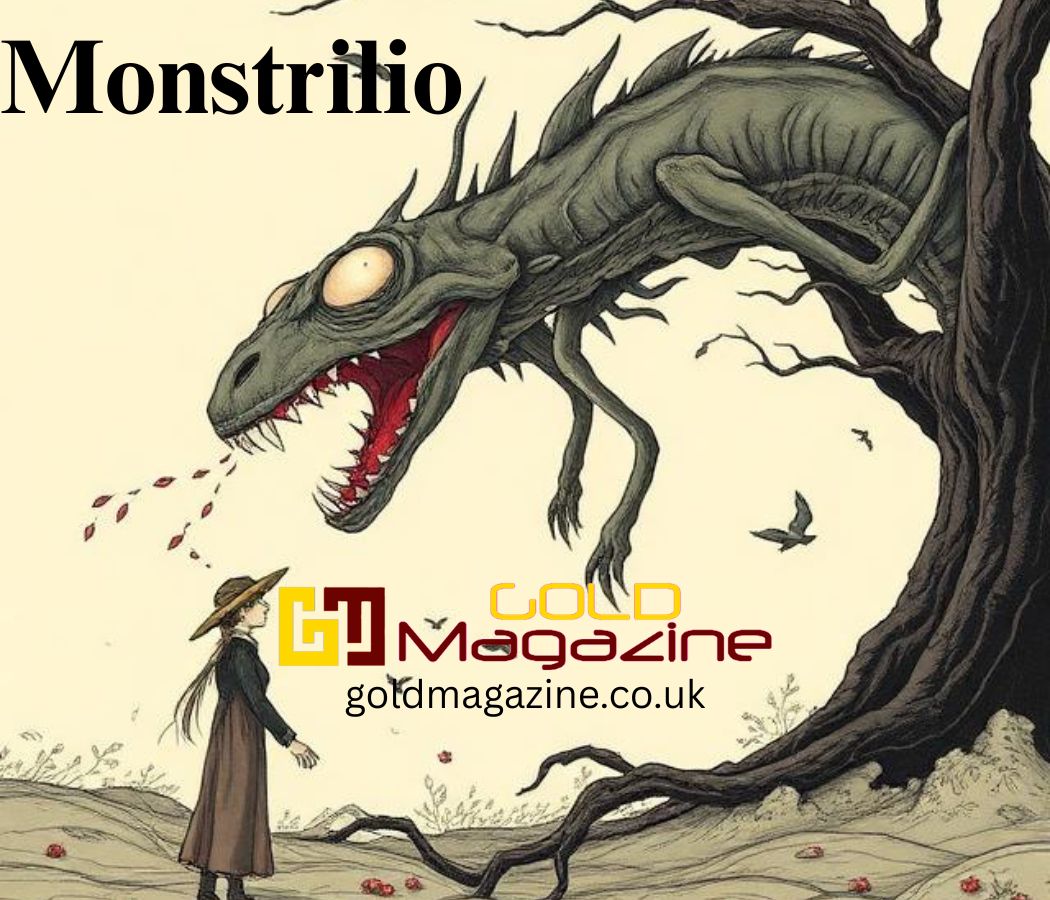
“Monstrilio” has a Lexile measure of about 780L–870L, appropriate for grades 10–12 (ages 15–18). The novel is written in a sophisticated, literary style, making it more suitable for upper high school students and adults rather than younger readers. Its complex themes and vivid imagery make it an excellent choice for mature readers.
Here is a detailed breakdown of the book’s reading level and key stats:
| Statistic | Details |
|---|---|
| Lexile Measure | ~780L – 870L |
| Recommended Grade Level | Grades 10 – 12 (Ages 15 – 18) |
| Page Count | 336 pages (Hardcover, Zando, 2023) |
| Word Count | Approx. 82,000 – 90,000 words |
| Average Sentence Length | 12 – 15 words |
| Genre | Literary Horror / Dark Fantasy |
Is “Monstrilio” a Difficult Read?
For its intended audience (young adults and adults), “Monstrilio” is not a difficult read. It is widely described by readers as a “fast-moving,” “absorbing,” and “page-turner” of a novel. However, certain aspects contribute to its moderate challenge level.
Here are the specific factors that contribute to its accessibility:
-
Engaging and fluid prose
Gerardo Sámano Córdova’s writing style is often hailed by critics as having “prose so beautiful you won’t want to rush”. The narrative flows smoothly, which makes the reading experience highly immersive. -
Unique structure that aids comprehension
The novel is divided into four acts, each told from a different character’s point of view (Magos, Lena, Joseph, and Monstrilio himself). This clear structure helps readers digest the story in digestible chunks and understand the complex themes from multiple angles. -
Stream-of-consciousness narration
Some sections feature a stream-of-consciousness style, which can be a bit more demanding if you are new to this literary technique. However, Sámano Córdova masterfully keeps the pacing brisk and the emotional core accessible. -
Potential barriers for sensitive readers
While not “difficult” in terms of vocabulary, the book’s challenging subject matter can be emotionally intense. It contains graphic violence, body horror, and deals with heavy themes like child loss. This makes it a demanding read on an emotional level, which is important to consider before starting.
9 Powerful Reasons to Read “Monstrilio”
Deciding to pick up a unique blend of horror and literary fiction is a big commitment. Here are nine compelling reasons why “Monstrilio” deserves a spot on your reading list and is well worth the emotional investment.
| Reason Number | Reason | What to Expect |
|---|---|---|
| 1 | An Unforgettable, Unique Premise | A grieving mother nurtures her dead son’s lung into a carnivorous creature called Monstrilio—a premise unlike anything else in the genre |
| 2 | A Masterful Hybrid of Genres | Not just horror—it’s a queer coming-of-age story, family drama, grief meditation, and psychological thriller, all wrapped into one wholly unique package |
| 3 | A Deep and “Painfully Public” Exploration of Grief | Unlike private-grief stories, this raw novel forces characters and creature to face the world—showing how grief transforms, alienates, and makes monsters of us all. |
| 4 | Innovative Multi-Perspective Narrative | Four narrators—mother, friend, father, and the monster—create a layered portrait of a family in crisis and the creature at its center |
| 5 | A Powerful Queer Narrative | Queer in theme and character, it explores love beyond coming-out—Joseph’s bisexuality is natural, not a plot device. |
| 6 | Critically Acclaimed and Award-Winning | A Best Book of 2023 (Barnes & Noble, Powell’s, Elle, BookPage) and winner of the 2024 Balcones Fiction Prize. |
| 7 | A Fast-Paced and Absorbing Read | Despite heavy themes, readers call it a ‘wild ride’ and ‘page-turner’ you’ll devour in a few sittings. |
| 8 | Relatable Characters (Even the Monster) | You don’t have to like the characters to be fascinated by them. They are deeply flawed, making real and often terrible choices, but they are always compelling and achingly human |
| 9 | An Immersive, Multi-Continental Setting | From a decaying Mexico City estate to Brooklyn and Berlin, this globe-trotting narrative adds a rich visual layer. |
“Monstrilio” Review: A Mother’s Grief and the Carnivorous Creature She Brings to Life
Within the decaying walls of a family estate in Mexico City, a mother performs the most desperate and deranged act of love imaginable. Gerardo Sámano Córdova’s debut novel, “Monstrilio” (Zando, 2023), is not just another horror story. It is a haunting, visceral, and unexpectedly tender exploration of grief, queerness, and the monstrous lengths to which we go for the ones we love.
The novel opens with a shocking act of maternal desperation. After the death of her 11-year-old son, Santiago, grieving mother Magos cuts out a piece of his lung. Following the dubious logic of an old folktale, she nurtures the organ in a jar until it grows into a sentient, carnivorous creature she names Monstrilio.
From this grotesque and unforgettable premise, Sámano Córdova (who holds an MFA from the University of Michigan) spins a story that defies easy categorization.
The narrative is split into four distinct acts, one for each of the novel’s central characters: Magos, her best friend Lena, her husband Joseph, and finally, the terrifying yet charming Monstrilio himself. This structural choice is a masterstroke, allowing the reader to experience a kaleidoscope of perspectives on the same extraordinary events.
Despite its fantastical premise, the horror in “Monstrilio” is deeply rooted in reality. Sámano Córdova isn’t interested in cheap thrills. Instead, he examines how grief alienates us from our loved ones, how love can be conditional, and what it means to be truly seen. As Magos’s family attempts to domesticate the creature, hiding him from the world, they are forced to confront their own monstrous sides. The novel ultimately asks a profound question: If a family had to love a literal monster, would that love break?
Monstrilio Ending Explanation: What Happens to Magos, Joseph, and M?
This section contains major spoilers for the ending of “Monstrilio.”
The novel’s final act is told from the perspective of Monstrilio himself, now going by the name M. Having matured into a being that is nearly indistinguishable from a human teenager, M is living his life as he battles his inherent monstrous nature.
For a time, he finds a semblance of peace. However, his animalistic urges cannot be suppressed forever. After a particularly violent outburst, M realizes that he can never truly be the human his family wants him to be. The novel ends not with a climactic death, but with a quiet and devastating acceptance.
Magos: Having channeled her grief into a career as a celebrated performance artist, Magos finally comes to terms with her loss. Her arc concludes with a bittersweet peace, accepting that M must leave to find his own path. She learns to live with her monster, and to let him go.
Joseph: After divorcing Magos, Joseph has moved on and found love with a man named Peter. The ending for Joseph is more ambiguous. He appears to have a chance at normal happiness, but it is built on the fragile foundation of a secret—the true nature of his “son”.
M (Monstrilio): M’s ending is the most striking and thematically resonant. He ultimately chooses to embrace his monstrous self. He leaves behind his family and human relationships to pursue an unknown future as a creature of pure freedom and appetite. The ending suggests that some being cannot be tamed or forced into a “human” mold without suffering.
Who Is Gerardo Sámano Córdova?
Gerardo Sámano Córdova is a Mexican writer and artist whose vibrant, boundary-pushing work draws from a rich well of influences. He holds an MFA in fiction from the University of Michigan, and his writing has appeared in prestigious literary journals such as The Common, Ninth Letter, Passages North, and Chicago Quarterly Review.
His debut novel, “Monstrilio,” grew from a central question that has haunted him: “How far can love stretch before it breaks?”. As a queer writer, he is deeply interested in defying binaries and exploring themes of otherness and bodily autonomy.
In a 2024 interview with F(r)iction, Sámano Córdova explained his dual goals for the novel:
“One, to have queer characters exist in a world without prejudice, acceptance, or the need for explanation; two, to tell a story in a queer way, challenging what we think traditional narrative should be”.
He is currently at work on a second novel, which he has hinted will continue to explore the “expansive, inexplicable nature of queerness in literature”.
Top 10 Key Themes, Motifs, and Symbols in “Monstrilio”
“Monstrilio” is a dense, thematically rich text that rewards close reading. For book clubs and literature lovers, these are the crucial elements to discuss.
Core Themes
-
Humanity Versus Monstrosity: The novel constantly blurs the line between human and monster. Is M the monster for his violent urges, or are the humans who created and enabled him just as monstrous? The motif of Performance is central here, as each character puts on an act to disguise their true nature and fit into society.
-
The Fear of Love Being Conditional: At its heart, the novel asks if love can survive any condition. The characters are terrified of being truly seen and rejected. M’s greatest fear is that his family will stop loving him if they fully grasp what he is.
-
Family Dynamics in the Face of Grief: Sámano Córdova portrays how a shared tragedy can both bond and irrevocably split a family. Joseph grieves openly and “correctly,” while Magos’s grief is cold and physical. Their inability to understand each other’s pain is what ultimately tears their marriage apart.
Recurring Motifs
-
The Motif of Performance (Theme of Humanity vs. Monstrosity): Characters are always “on stage.” Magos’s grief is private and seen as a failure to perform, while her later career as a performance artist is a direct attempt to make her internal pain external. Joseph’s new relationship is itself a performance built on lies.
-
The Folktale Logic: The entire premise is driven by the logic of a folktale, where magic and horror coexist with the mundane. This motif allows the story to explore extreme emotional states without needing to be constrained by realism.
-
Food and Consumption: The act of feeding is central. Magos feeds the lung, and the lung feeds on flesh. This motif extends to M’s sexual appetite as he comes of age, linking hunger of the body to hunger for acceptance and identity.
Powerful Symbols
-
The Arm-Tail: This vestigial limb on Monstrilio is a potent symbol. It is a reminder of the “otherness” he can never fully shed. When M is forced to cut it off to appear more human, he falls into a deep depression, indicating that his monstrous part is inseparable from his identity.
-
The Lung: More than just a body part, the lung is the ultimate symbol of grief made flesh. It is the impossible, physical object of Magos’s denial, a relic she clings to because she cannot cling to her son.
-
The Decaying Mexico City Estate: The crumbling family mansion where Monstrilio is hidden represents the decay of Magos’s psyche and the rot at the heart of the family. It is a gothic, liminal space where the rules of the outside world don’t apply.
-
Windows and Glass: Throughout the novel, characters observe Monstrilio “through the glass”—through a car window, a tank, or a jar. This symbolizes the emotional distance between them and the creature, and their desire to observe horror without fully engaging with it.
Important Information:
-
Author: Gerardo Sámano Córdova
-
Page Count: 336 pages (Hardcover)
-
Lexile Measure: 780L – 870L
-
Reading Age: 15+ (Grades 10-12)
-
Awards: Winner of the 2024 Balcones Fiction Prize, Best Books of 2023 (Barnes & Noble, Elle, Powell’s)
Conclusion: A Haunting and Unforgettable Debut
“Monstrilio” is a singular achievement—a literary horror novel that is as heartbreaking as it is horrifying. It is a book about monsters, but its greatest power lies in its unflinching portrait of the humans who create them. If you are a reader seeking a story that is challenging, beautiful, and unlike anything you have ever read, “Monstrilio” is an essential addition to your collection.