
 By gold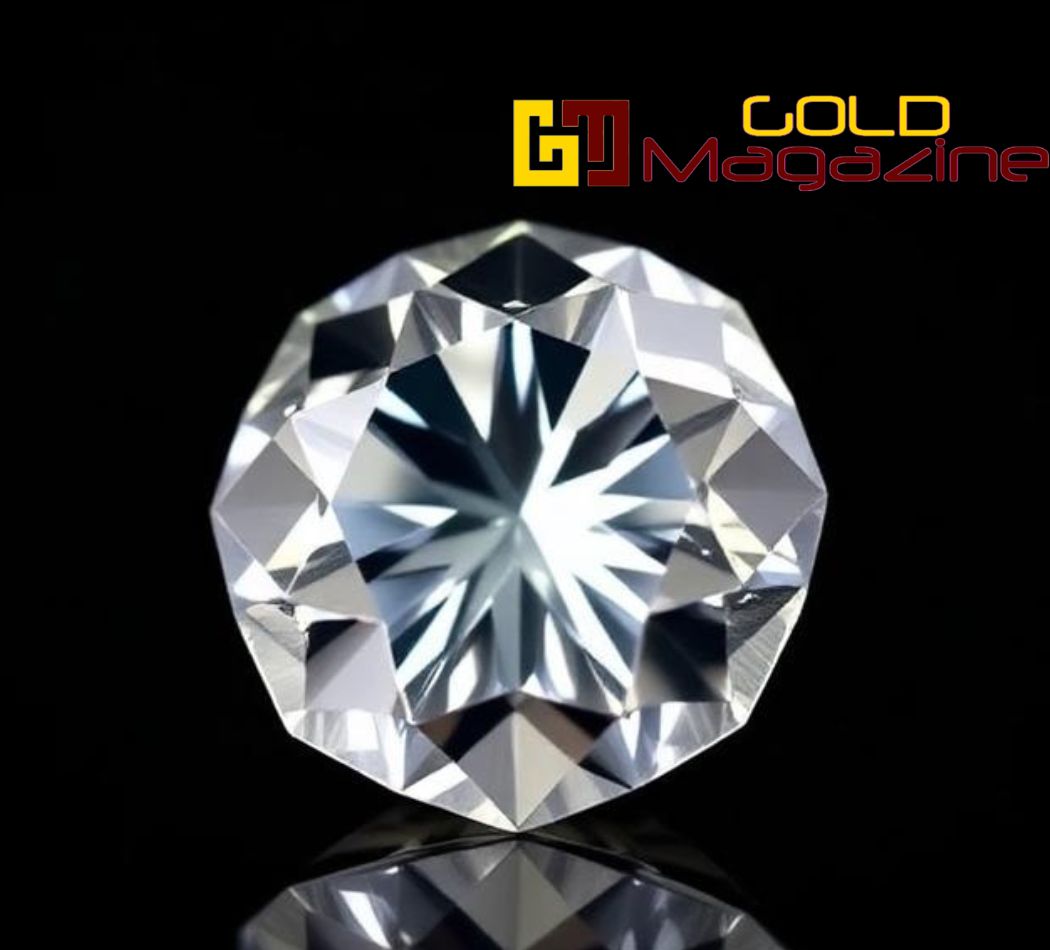
Imagine holding a diamond that is chemically, physically, and optically identical to one forged deep within the Earth over billions of years—yet it was grown in a laboratory in just a few weeks. This is the reality of the modern fab diamond revolution.
“Lab-grown diamonds are reshaping the world of jewellery. They have made larger stones, distinctive settings or bespoke creations accessible without stretching a customer’s spend.” — Myrtle Polymenopoulos, Austen & Blake
The diamond industry is undergoing a seismic shift. What was once the exclusive domain of geologists and miners has now become a triumph of human engineering. Whether you are shopping for an engagement ring, investing in a luxury asset, or are simply curious about the future of gemstones, understanding “fab diamonds”—also known as lab-grown or synthetic diamonds—is essential.
In this comprehensive guide, we will dig deep into the science, the economics, and the ethics of fab diamonds. We will explore why university researchers are calling them “the best” , what they mean for your wallet, and how to navigate the choices between the natural and the man-made.
Background: What Exactly is a “Fab Diamond”?
First, let us clear up a common misconception: A fab diamond is not a fake. It is not a simulant like cubic zirconia or moissanite. A lab-grown diamond is real diamond—period.
The Science of Creation
Natural diamonds form 150 to 200 kilometers below the Earth’s surface, subjected to extreme heat and pressure over 1 to 3 billion years. They are then brought to the surface by volcanic eruptions .
Lab-grown diamonds replicate this process using two main methods:
-
High Pressure-High Temperature (HPHT): This method mimics Earth’s natural conditions. A small diamond “seed” is placed in a chamber with carbon and subjected to intense pressure and heat, causing carbon atoms to crystallize around the seed .
-
Chemical Vapor Deposition (CVD): This is a newer, more precise method. A diamond seed is placed in a vacuum chamber filled with carbon-rich gas (like methane). Microwave energy breaks the gas molecules, allowing carbon atoms to rain down and layer onto the seed, building the diamond atom by atom .
The result? A gemstone with the exact same crystal structure, hardness (10 on the Mohs scale), and brilliance as a mined diamond .
Main In-Depth Sections: The Fab Diamond Advantage
The Scientific Breakthrough: Not Just for Jewelry
While jewelry drives consumer awareness, the most exciting developments in fab diamonds are happening in university labs. Recent advancements have pushed lab-grown diamonds beyond the “Four Cs” of jewelry into the realm of “Advanced Materials.”
The HKU Edge-Exposed Exfoliation
In 2024, researchers at the University of Hong Kong (HKU) published a breakthrough in Nature. They developed an “edge-exposed exfoliation” technique that produces ultrathin, ultra-flexible diamond membranes at scale.
Imagine fabricating a two-inch diamond wafer in just 10 seconds—a feat unattainable with conventional methods .
This technique yields diamond membranes just nanometers thick, with ultra-flat surfaces. These fab diamonds are compatible with existing semiconductor factories and are poised to revolutionize electronics. Professor Zhiqin Chu envisions commercializing this to usher in a “diamond era,” with applications in flexible wearables, photonic devices, and heat spreaders for electric vehicles .
The Hardest Diamond Yet
Researchers have synthesized “hexagonal diamonds” (lonsdaleite) in the lab. This rare polymorph clocks in at 155 GPa hardness compared to natural cubic diamonds’ 110 GPa. These lab-grown variants offer superior stiffness and thermal stability, making them ideal for drilling tools and data storage .
Market Growth and Consumer Trends
The numbers paint a clear picture of a market in transformation.
-
Market Size: The global lab-grown diamond market was valued at USD 29.46 billion in 2025 and is projected to reach USD 91.85 billion by 2034, growing at a CAGR of 13.42% .
-
Price Difference: Lab-grown diamonds are currently 30-70% cheaper than natural diamonds per carat . This price gap is widening as technology improves, with some reports suggesting they are up to 73% cheaper than natural ones .
-
Consumer Shift: In Australia, market research estimates the retail market share for lab-grown diamonds is between 50-60%, with projections reaching 70% by the end of 2026 .
Practical Tips / How-to: How to Buy a Fab Diamond
If you are considering a lab-grown diamond, here is how to navigate the purchase:
1. Check the 4 Cs (Cut, Color, Clarity, Carat)
Just like natural diamonds, lab-grown diamonds are graded on the 4 Cs.
-
Cut: This is the most important factor for brilliance. Look for “Excellent” or “Ideal” cuts.
-
Color: “D” to “F” are colorless and the most prized. “G” to “J” are near-colorless and offer good value.
-
Clarity: Lab-grown diamonds often have fewer inclusions than natural ones. Look for “VS1” (Very Slightly Included) or “VVS2” for excellent quality.
-
Carat: With lab-grown stones, you can often afford a larger carat weight for the same budget.
2. Demand Certification
Always ensure your diamond comes with a grading report from a reputable lab. The Gemological Institute of America (GIA) and the International Gemological Institute (IGI) both grade lab-grown diamonds . This certification guarantees you are getting a genuine diamond of the specified quality.
3. Understand the Trade-offs
-
Resale Value: Acknowledge that lab-grown diamonds generally have lower resale value than natural diamonds . “In circumstances where jewellery is later sold, the intrinsic worth of a synthetic diamond is effectively zero, leaving only the value of the precious metal,” warns the Jewellers Association of Australia .
-
Price Trends: Prices are expected to drop further as production capacity increases . If you buy a lab-grown diamond, do so for its beauty and affordability, not as a financial investment.
Common Mistakes or Challenges + Solutions
The “Eco-Friendly” Fallacy
Many marketers tout lab-grown diamonds as inherently “eco-friendly.” However, the reality is nuanced. The process of creating diamonds, especially HPHT, requires significant energy. “For some consumers who thought they were purchasing a more environmentally friendly option they are now shocked to see the factory and conditions where these stones are produced,” notes Justin Linney of Linneys .
Solution: Research the manufacturer. Look for companies that use renewable energy sources or are transparent about their carbon footprint.
The “Perfect” Diamond Trap
There is a growing trend of lab-grown diamond manufacturers moving toward “D-Flawless” stones . While this sounds ideal, it also means you are paying a premium for a characteristic that is becoming increasingly common. As Viral Mehta of Grown Diamond Corp points out, “Nobody wants to go around with a 6 or 7 ct. diamond on their hand” .
Solution: Focus on what looks beautiful to you. A “VS1” clarity and “G” color diamond will look just as stunning as a “D-Flawless” one to the naked eye, and it will be significantly cheaper.
Pros, Cons, and Balanced Analysis
To help you decide, here is a balanced breakdown:
| Feature | Pros (Fab Diamonds) | Cons (Fab Diamonds) |
|---|---|---|
| Cost | Significantly cheaper (30-70% less) . | Low resale value; prices likely to continue dropping . |
| Quality | Often higher clarity and color grades than natural stones . | Lack the “uniqueness” of natural inclusions that some collectors value. |
| Ethics | Conflict-free; controlled supply chain. | Energy-intensive production; environmental impact varies by manufacturer. |
| Tech | Superior for industrial applications (quantum, electronics) . | Not seen as a “heirloom” or “traditional” investment piece. |
| Appearance | Visually indistinguishable from natural diamonds . | Market perception still evolving; some perceive them as “less valuable.” |
Future Trends or Predictions (2026-2034)
The fab diamond market is evolving rapidly. Here is what to expect:
1. The “Diamond Era” of Electronics
With breakthroughs from HKU, Rice University, and the Princeton Plasma Physics Laboratory (PPPL), fab diamonds are set to replace silicon in high-power electronics, quantum sensors, and thermal management systems . This will create a massive new industrial market beyond jewelry.
2. Specialization and Differentiation
The lab-grown diamond market is bifurcating. On one side, we are seeing the rise of “perfect” D-Flawless stones . On the other, the natural diamond market is leaning into “imperfections” and uniqueness to differentiate itself . Expect lab-grown sellers to focus more on custom designs and storytelling to maintain value.
3. Price Stabilization?
While prices have fallen dramatically, some analysts suggest the drop is slowing. Edahn Golan notes that lower-quality lab-grown diamonds (SI and I1 clarities) are essentially no longer sold because they aren’t worth the energy cost to produce . The market is moving toward higher-quality goods, which may eventually stabilize prices.
Conclusion & Key Takeaways
The fab diamond is more than just a cheaper alternative; it is a technological marvel that is democratizing a symbol of love and enabling the next generation of electronics.
Key Takeaways:
-
Fab diamonds are real. They have the same chemical, physical, and optical properties as natural diamonds .
-
They are affordable. You can get a significantly larger and higher-quality stone for your budget .
-
Resale value is limited. Buy a lab-grown diamond for enjoyment, not as an investment .
-
The future is bright. Beyond jewelry, fab diamonds are at the forefront of quantum computing and advanced electronics .
-
Certification matters. Always buy from a reputable dealer who provides certification (GIA, IGI) .
Whether you are a tech enthusiast, a budget-conscious shopper, or an investor, the fab diamond revolution offers a compelling narrative about innovation, value, and the future of luxury.
Detailed FAQs
1. Are lab-grown diamonds fake?
No. They are real diamonds. They share the same chemical composition (pure carbon) and crystal structure as natural diamonds. They are distinct from diamond simulants like cubic zirconia or moissanite, which are different materials entirely .
2. Can a jeweler tell if a diamond is lab-grown?
Not by the naked eye. Even professional jewelers require specialized equipment, such as a diamond loupe or UV ray testing, to distinguish them. They are visually and chemically identical .
3. Do lab-grown diamonds hold their value?
Generally, no. Lab-grown diamonds have a negligible resale value compared to natural diamonds. The increasing supply and decreasing production costs mean they are unlikely to appreciate or even hold their initial purchase price .
4. Are lab-grown diamonds cheaper?
Yes. They are typically 30-70% less expensive than natural diamonds of the same carat, cut, color, and clarity .
5. Are lab-grown diamonds environmentally friendly?
Potentially. They avoid the environmental impact of mining. However, the manufacturing process (especially HPHT) is energy-intensive. It is important to research the company’s specific practices regarding energy sourcing .
6. What is the future of the lab-grown diamond market?
Strong growth. The market is projected to grow from $33.54 billion in 2026 to $91.85 billion by 2034 . Beyond jewelry, they have massive potential in electronics, quantum technology, and industrial applications .
Sources
-
Chicago Tribune. “Lab-fab diamonds are girl’s best friend.” (2003)
-
AcademicJobs.com. “Fab Diamond: Researchers Say This Is the Best Type of Diamond.” (2026)
-
The Business Research Company via Research and Markets. “Lab Grown Diamonds Market Report 2026.”
-
GII Research. “CVD Lab-grown Diamond Market by Carat Weight, Product Type, Application, Sales Channel – Global Forecast 2026-2032.” (2026)
-
Fortune Business Insights. “Lab Grown Diamond Market Size, Share, Trends | Growth [2034].”
-
Australian Broadcasting Corporation (ABC). “Diamonds might be forever, but lab-grown ones tend to lose their value.” (2025)
-
Leon Diamond. “Are Lab-Grown Diamonds Worth It? Pros and Cons.” (2025)
-
Brilliance.com. “Lab Grown vs. Natural Diamonds: What’s the Difference?” (2024)
-
JCK Magazine. “Lab-Grown Diamond Market Moves Toward Better-Quality Goods.” (2026)