
 By gold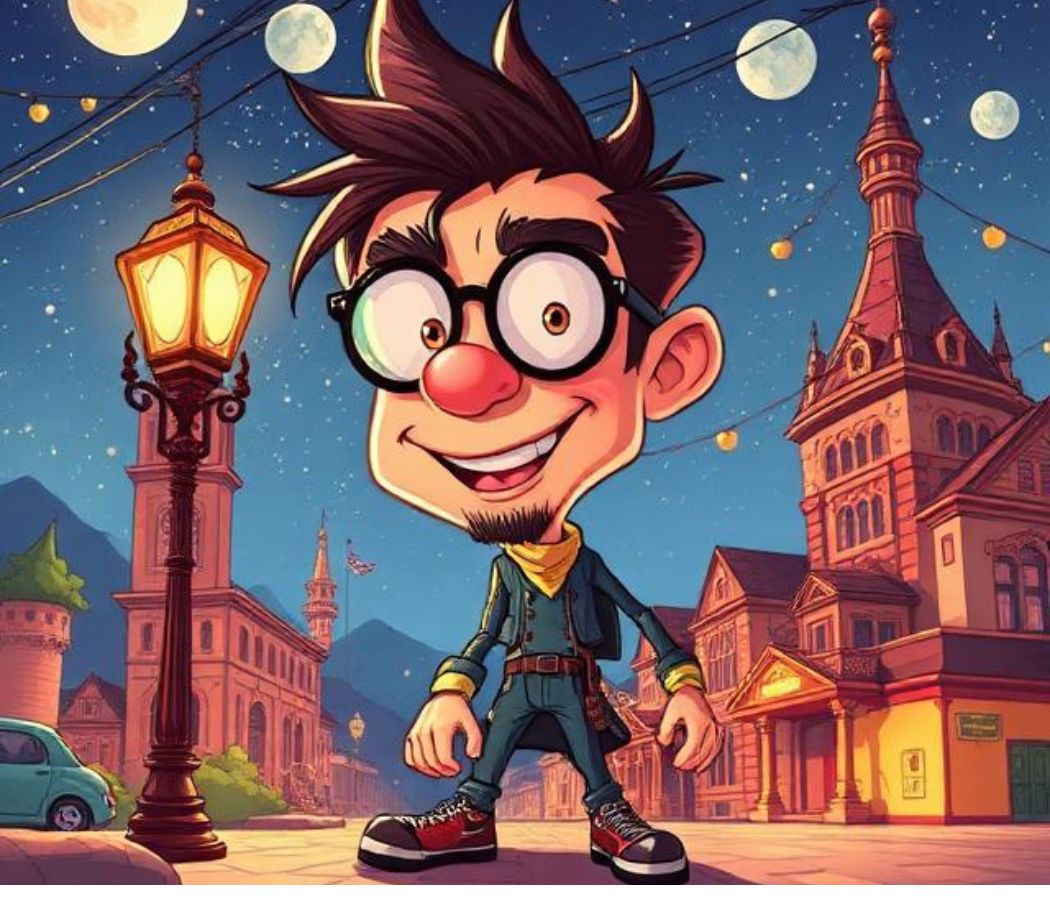
Imagine a world where humor dances on the canvas, blending creativity and laughter into something truly unique.
Welcome to the world of Caricatronchi. You might have scrolled past one on social media or seen a vibrant, exaggerated portrait pop up on your feed without knowing its name. It catches your eye instantly—oversized eyes, neon color palettes, thick black outlines, and a sense of personality that seems to jump off the screen.
But Caricatronchi is more than just a funny drawing. It is a rapidly growing digital art movement sitting at the intersection of classical caricature, pop art, and artificial intelligence.
In this post, we are going to pull back the curtain on this creative phenomenon. We’ll explore where it came from, how it differs from the guy drawing faces at the county fair, and why it might just be the defining art style of the digital age.
What is Caricatronchi? (The Short Definition)
The word itself is a fusion. While the Italian term “caricatronchi” technically refers to a log loader or forestry machine (a very different kind of heavy machinery!), in the art world, it has been repurposed to describe a specific aesthetic.
It combines “Caricature” (the art of exaggerating features for humor) with the Italian-inspired suffix “tronchi,” implying chunkiness, boldness, or a rough-hewn texture.
In practice, Caricatronchi is a style of digital illustration that exaggerates facial features and expressions—big noses, tiny bodies, massive glasses—but renders them with hyper-saturated colors, crisp vector lines, and a polished, almost “plastic” sheen that feels distinctly modern.
The Origin: From 16th Century Europe to Digital Domination
To understand Caricatronchi, we have to respect its ancestors. Traditional caricature has roots stretching back to 16th century Europe. Artists like Leonardo da Vinci dabbled in grotesque studies, but it was in the streets of Bologna and Rome that “caricatura” (meaning “to overload” or “exaggerate”) became a popular art form.
Fast forward to the 21st century.
The internet changed everything. While traditional caricature relied on pen and paper at live events, the digital native wanted something louder, faster, and more shareable. Caricatronchi emerged from specialized online art circles, drawing inspiration from:
-
Meme Culture: The need for relatable, expressive reaction images.
-
Street Art & Pop Art: The bold colors of Keith Haring and the pop surrealism of Roy Lichtenstein.
-
Anime & Cartoons: The expressive emotional range found in Japanese animation.
It took the “soul” of traditional caricature and gave it a digital facelift.
Caricatronchi vs. Traditional Caricature: What’s the Difference?
If you are an artist or a buyer, you might wonder: Why not just get a traditional sketch?
Here is the breakdown of why Caricatronchi stands alone:
| Feature | Traditional Caricature | Caricatronchi (Modern) |
|---|---|---|
| Medium | Pen, ink, watercolor on paper. | Procreate, Photoshop, Illustrator, or AI Generators. |
| Color Palette | Natural skin tones, muted backgrounds. | Neon, vibrant, electric. Unnatural skin tones are encouraged. |
| Line Work | Sketchy, organic, varying in weight. | Thick, clean, uniform. Almost like a sticker or vinyl toy. |
| Purpose | Live entertainment, souvenir (cruise ships, fairs). | Social media avatars, NFT assets, branding, streaming emotes. |
| Humor | Gentle teasing of physical traits (big ears). | Cultural critique, meme-adjacent, “vibes,” and personality distortion. |
The Creative Process: How to Make a Caricatronchi
You don’t need to be a master painter to start, but you do need an eye for personality. Here is how artists typically build a piece.
1. The Spark (Observation)
Artists look for a “tell.” It isn’t just about a big nose; it is about how a person scrunches that nose when they laugh, or the specific way they hold their coffee cup. Caricatronchi captures the vibe, not just the bone structure.
2. The Sketch (Exaggeration)
Using digital tools like a Wacom tablet or iPad, the artist creates the skeleton. They push the features to the edge of abstraction. The goal is to keep the subject recognizable while pushing the “weird” dial to 11.
3. The Render (The “Tronchi” Effect)
This is where the magic happens. Instead of realistic shading, the artist uses cell shading (hard edges) and saturation. They remove the noise. The result looks less like a drawing and more like a high-end 3D render or a pop vinyl figure.
4. The Context (Backgrounds)
Unlike traditional sketches on white paper, Caricatronchi often places the subject in a context. Maybe they are melting, maybe they are surrounded by flames, or maybe they are in a surreal, dreamlike void. This adds to the storytelling.
The Role of AI in the Caricatronchi Movement
We cannot talk about this art form without discussing the elephant in the room: Artificial Intelligence.
Caricatronchi has become a testing ground for AI art tools. Platforms like Midjourney and DALL-E have popularized “selfie to caricature” transformations.
-
The Pro: AI allows non-artists to participate. You can turn a boring LinkedIn photo into a punk-rock caricatronchi avatar in seconds. It democratizes the style.
-
The Con: Purists argue that AI misses the “soul.” A human artist knows why your friend’s crooked smile is funny. AI just knows what a crooked smile looks like statistically.
The Verdict? The best Caricatronchi work currently happens in the hybrid space. Artists use AI to generate backgrounds or color palettes, then hand-draw the emotion and exaggeration over the top.
Why is Caricatronchi so Popular Right Now?
You are seeing this style everywhere because it solves a problem for the digital generation.
-
Branding for Streamers & Influencers: On Twitch or TikTok, you need a profile picture that pops in a tiny thumbnail. The thick lines and bright colors of Caricatronchi are perfect for “clickability.”
-
Mental Health & Identity: The style often delves into “ugly” emotions—screaming, crying, maniacal laughing—and makes them beautiful. It validates the chaos of modern life.
-
The NFT Boom: The bold, collectible look of Caricatronchi fits perfectly into the Crypto art space. These images look good as profile pictures (PFPs) and as large-scale prints.
How to Get Started with Caricatronchi
Feeling inspired? Here is how to dip your toes in the water.
-
Study the Greats: Look up modern digital artists like Alessandro Romano or Clara Voci (famous names in this niche) to study how they handle line weight and color.
-
Get the Tools: You don’t need expensive gear. A basic drawing tablet and Free software like Krita or GIMP works. If you have an iPad, Procreate is the industry standard.
-
Practice the “Push”: Take a photo of a friend. Draw them exactly. Then, draw them again but push one feature (eyes, mouth, ears) 50% larger. Keep going until it breaks, then pull back a little.
-
Join a Community: Reddit and Discord have active “Art Fight” and Caricature communities where they share prompts like “Algorithmic Guilt” or “Surveillance Selfie” to inspire new pieces.
Conclusion
Caricatronchi is more than a gimmick. It is a reflection of how we see ourselves online: exaggerated, vibrant, and slightly unhinged, but full of personality.
Whether you are an artist looking for a new revenue stream (commissions for these are hot right now) or just someone who wants a cool new avatar, this art form offers a unique blend of humor and craft.
So, go ahead. Find a photo of yourself, crank up the saturation, stretch your biggest feature, and join the revolution.
Have you tried making a Caricatronchi portrait? Share your best attempts (or your favorite artist) in the comments below!