
 By gold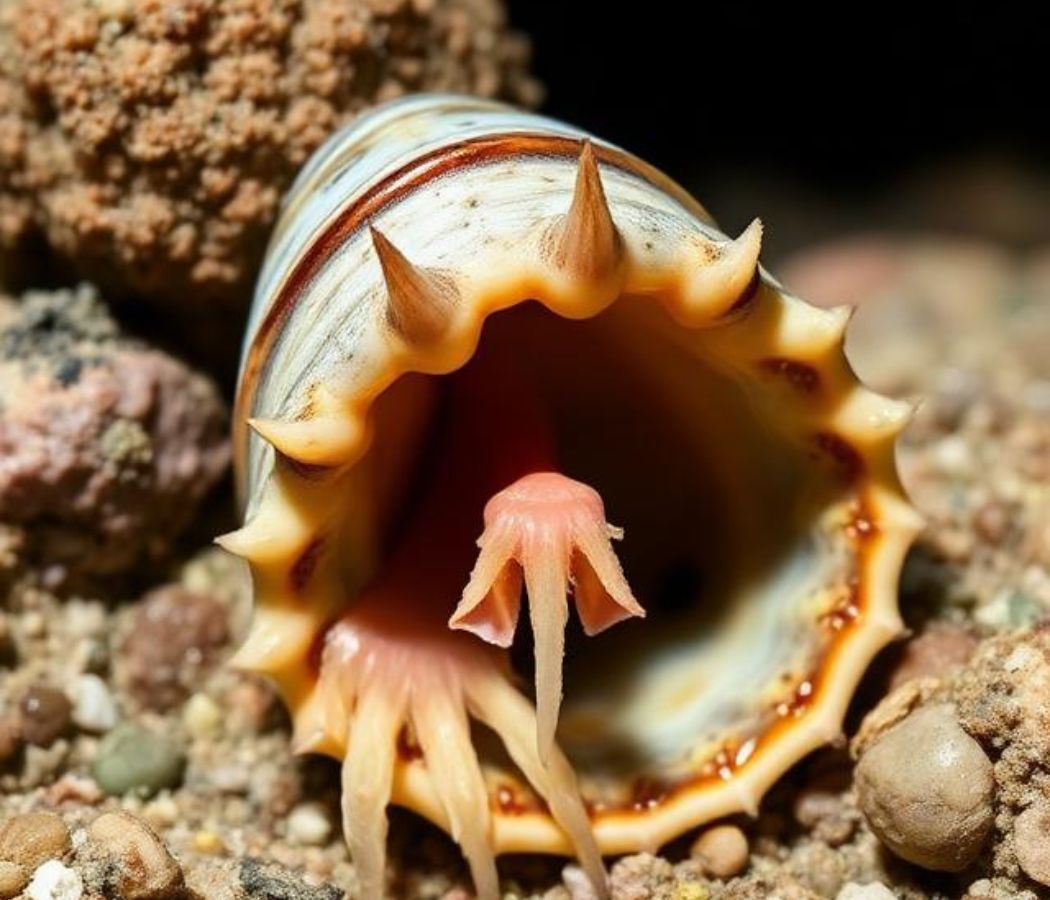
When you walk along the seashore, you’ve likely seen them: Those rough, white, volcano-shaped bumps clinging to rocks, piers, and the bottom of boats. Most people mistake them for mollusks, like mussels or clams, due to their hard outer shells.
But look closer. If you peel back that shell (or wait for feeding time), you aren’t looking at a mollusk—you are looking at a crustacean.
Welcome to the bizarre world of the barnacle, the only arthropod that lives its life permanently glued to its head inside a limestone fortress.
Why Barnacles Are Actually Arthropods
It is one of the greatest imposter syndromes in nature. The 19th-century naturalist Louis Agassiz famously described the barnacle as “nothing more than a little shrimp-like animal, standing on its head in a limestone house and kicking food into its mouth”.
Barnacles belong to the subclass Cirripedia in the phylum Arthropoda. This means they are directly related to crabs, lobsters, and shrimp. If you look at a barnacle larva, it looks like a tiny version of its crab cousins.
However, as an adult, the barnacle took a radical evolutionary turn. Instead of walking on the seafloor, it decided to do a headstand, cement its forehead to a surface, and build a wall of plates around itself for protection.
The Anatomy of a Headstand
Because they are upside down, the anatomy of a barnacle is a study in efficient engineering:
-
The Shell (Carapace): Made of calcium carbonate, these plates are fused together to form a volcano-like wall.
-
The Operculum: The top opening is sealed by movable plates that open to let food in and close tightly to keep moisture in during low tide.
-
The Cirri (The “Feet”): Where are the legs? They kick out the top! The barnacle uses feathery, leg-like appendages called cirri (Latin for “curly locks”) to reach out into the water.
-
The Body: Inside, the barnacle lies on its back. When the tide comes in, it opens its hatch and rhythmically kicks its legs to sweep plankton and detritus into its mouth.
The Barnacle Life Cycle: From Drifter to Gluer
The life cycle of the barnacle is the secret to its success. It is a tale of two very different lives.
Stage 1: The Nauplius
When a barnacle egg hatches, it releases a nauplius larva. This tiny creature has a single eye and looks like a small arthropod. It spends about six months drifting with the zooplankton, molting several times, and eating to grow.
Stage 2: The Cyprid (The Missionary)
This is the most crucial stage. The larva transforms into a cyprid. This stage does not eat; its only job is to find a home. It uses its antennae to crawl along surfaces, testing the chemistry, texture, and flow of the area.
Stage 3: Permanent Attachment
Once the cyprid finds the perfect spot (rock, boat, whale, or crab), it secretes a permanent protein-based adhesive from its cement glands—considered one of the strongest natural glues known to science. It attaches head-first, morphs into a juvenile, and builds its shell.
The Craziest Reproduction Strategy in the Sea
Barnacles face a major problem: They are stuck to a rock for life. They cannot get up and walk over to a neighbor for a date. So, how do they reproduce?
Evolution gave them a bizarre solution: They are hermaphrodites (possessing both male and female organs), and they have the longest penis relative to body size in the entire animal kingdom.
To reproduce, a barnacle extends a tubular penis that can stretch several times the length of its body to search for a neighboring barnacle. They inseminate their neighbor, and vice versa. When mating season ends, they actually shed their penis and grow a new one the following year.
Are Barnacles Harmful or Helpful?
The Problem: Biofouling
For sailors and industry, barnacles are a massive headache. When they attach to ship hulls, a process called biofouling, they increase drag. This forces ships to burn more fuel to maintain speed. Even today, the shipping industry spends billions of dollars on specialized copper-based paints to prevent barnacles from sticking.
The Parasites
Not all barnacles are filter-feeders. Some are parasitic. The Rhizocephala barnacles infect crabs, injecting cells into the crab’s body that take over its nervous system. Interestingly, the shark barnacle Anelasma squalicola has evolved to ditch its feeding legs entirely to root into the flesh of deep-sea sharks for nutrients.
The Helpers
On the flip side, barnacles create habitat. The thick layers of barnacles on a pier provide shelter for small fish and isopods. They are also excellent water filters, cleaning the ocean of particulate matter.
Conclusion
The barnacle proves that nature refuses to fit into neat boxes. It is a crustacean that looks like a mollusk, a shrimp that stands on its head, and a hermaphrodite with a detachable, extra-long reproductive organ.
Next time you see a white splotch on a rock, remember: You aren’t looking at a rock deformity or a simple shell. You are looking at an upside-down arthropod, sticking its feet out of a window, waiting for the tide to bring dinner.
Frequently Asked Questions (FAQs)
Q: Are barnacles dangerous to humans?
A: No, barnacles generally do not harm humans. However, their shells are extremely sharp, and walking barefoot on barnacle-encrusted rocks can cause deep cuts that are prone to infection.
Q: Can you eat barnacles?
A: Yes! The gooseneck barnacle (often called percebes in Spain and Portugal) is considered a delicacy. They are described as tasting like a cross between lobster and clam.
Q: Why do whales have barnacles?
A: Barnacles are epibionts (hitchhikers). They attach to whales to get a free ride through rich feeding grounds. Usually, this is a commensal relationship—the barnacle benefits, but the whale is neither helped nor harmed by the passengers.